NFL · OPINION & ANALYSIS
Kevin O’Connell Made a Major Mistake: Minnesota’s QB Plan Is Wasting Its Defense
The problem goes beyond losing Sam Darnold. Passing on Aaron Rodgers, moving on from J.J. McCarthy and trusting the remaining options deserve scrutiny.
Published · Best Betting Network
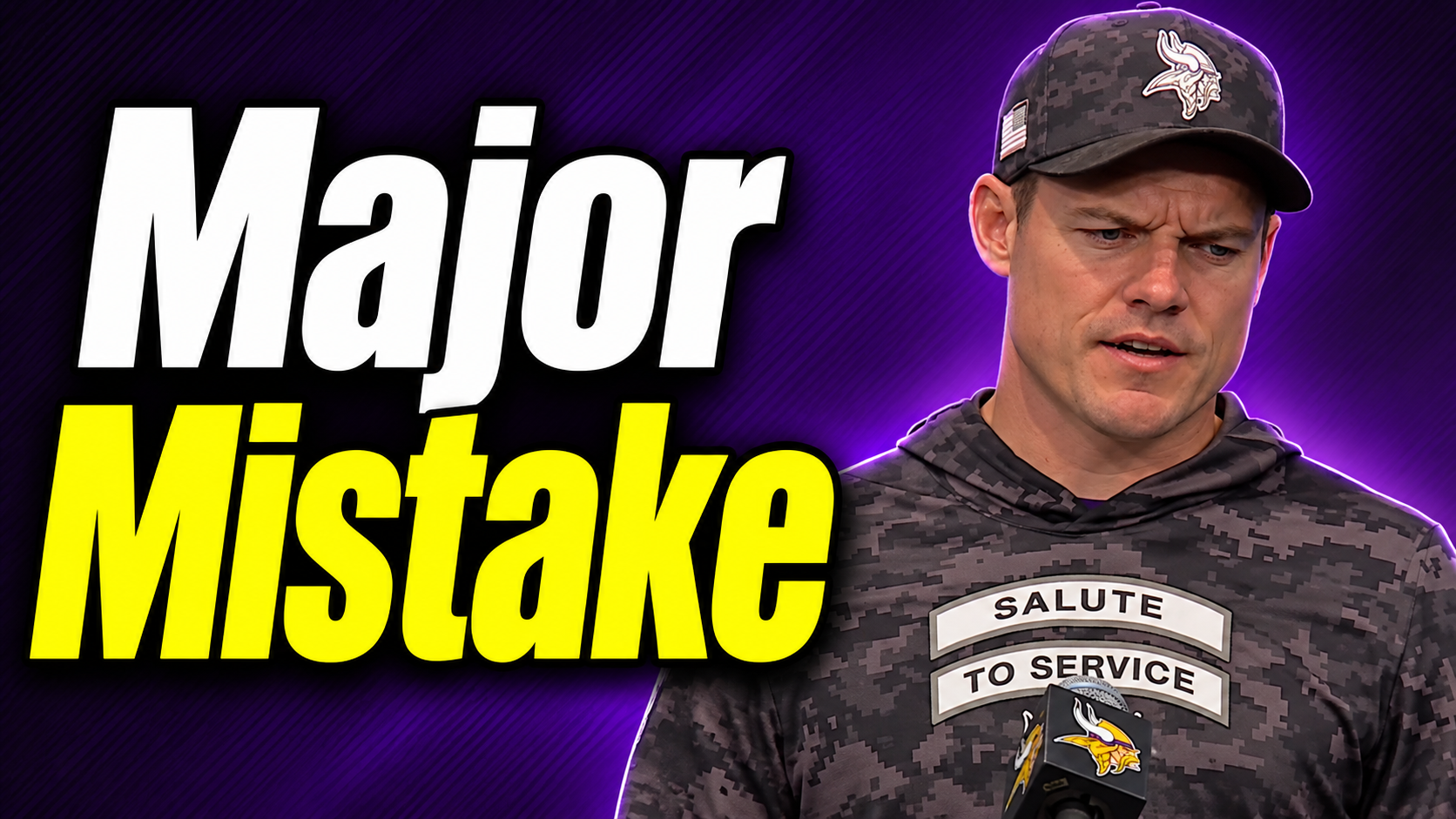
The Vikings’ quarterback problem did not begin with Monday night’s loss to Buffalo. For me, this is a longer story about decisions at the most important position, and about trusting that good coaching will be enough to make the pieces fit.
I am not putting the whole argument on Sam Darnold leaving. I can understand hesitating over a major financial commitment at quarterback. My bigger concern is the succession of choices that followed, especially the opportunity to pursue Aaron Rodgers and the later decision to trade J.J. McCarthy.
The Rodgers decision is where my criticism starts
There was real contact, not just a hypothetical fit invented after a bad game. In Lindsey Young’s March 31, 2025 report for the Vikings, O’Connell explained that Rodgers had reached out and the two had discussed the possibility. He also emphasized that Minnesota already had a quarterback plan involving McCarthy.
That is the choice I keep returning to. Minnesota had an opportunity to evaluate an established veteran while McCarthy was coming back from a lost rookie season. My view is that the organization put too much confidence in its ability to develop the position without adequately protecting the rest of the roster from the downside.
That does not prove Rodgers would have delivered a championship, or that a deal could have been completed on acceptable terms. His interest was not a signed contract. It also does not establish that Minnesota was the only team he would consider. The criticism is about the risk Minnesota accepted, not a claim that an alternate history is certain.
Monday made the cost impossible to ignore
Buffalo won 23–6 on November 9. Carson Wentz completed eight of 25 passes for 81 yards and threw two interceptions before Max Brosmer entered late. The Bills’ official recap and NFL gamebook document the result.
There is an important distinction here: Wentz was starting because Kyler Murray had a hamstring strain. This was not a confirmed performance benching of Murray. The Vikings announced that injury-driven change on November 5.
Watching the game, I was struck by how long Minnesota’s defense kept fighting while the offense gave it so little support. I already thought the defense was good. Seeing that effort unfold live made the gap between the two sides of the ball feel even bigger.
There is evidence behind that impression: Minnesota held Buffalo to 4.3 yards per play, according to the Vikings’ game observations. That does not turn a 23-point concession into a perfect defensive performance. It does help explain why the offensive failure felt like a wasted opportunity rather than just another loss.
Trading McCarthy made the contingency plan harder to defend
Minnesota traded McCarthy to the Giants for a 2027 fifth-round pick on September 28. The official transaction report establishes the terms. The subsequent explanation from O’Connell and general manager Nolan Teasley makes clear that this was an organizational decision, not something to attribute to the coach alone.
My concern is not that McCarthy was already a guaranteed answer. I cannot know exactly how he would be playing in Minnesota now. It is that the Vikings moved away from the young quarterback they had planned around, then found themselves relying on Murray, Wentz and Brosmer to keep a talented roster moving.
There were backup quarterbacks on the roster. The issue is whether the backup plan was good enough, not whether a depth chart existed. Monday’s performance is a strong reason to question the quality of that protection.
Coaching confidence cannot replace quarterback play
I think successful offensive coaches can become too confident in how much they can create with less at quarterback. That is my interpretation of the broader pattern here, not a claim to know what O’Connell privately believed.
The counterargument matters. Coaches see practices and medical information that viewers do not. Development is uncertain, veteran options have costs, and a bad night by a reserve does not automatically prove every earlier choice was wrong. McCarthy himself was not a risk-free investment.
Even with those qualifications, the standard has to be higher when the defense is playing this well and the offense includes a receiver like Justin Jefferson. I believe this team could be much more dangerous with merely dependable quarterback production. That is a football judgment, not a projection that average offense would guarantee a title.
The opportunity is still the point
I expected Murray to offer more, and there is still room for him to improve when healthy. But the Vikings cannot keep treating the position as something the scheme will eventually solve while asking the defense to carry everything else.
The major mistake, in my view, is the way Minnesota has managed its options across multiple decisions. The Rodgers opportunity and McCarthy trade are different moments, but together they raise the same question: did the Vikings do enough to protect a roster capable of competing at a high level?
Monday did not settle every counterfactual. It did make that question much harder to dismiss.
Analysis adapted from the November 10 reaction video. Reporting checked November 10, 2026 at 13:36 UTC. Historical decisions are dated separately; counterfactual outcomes remain opinions.